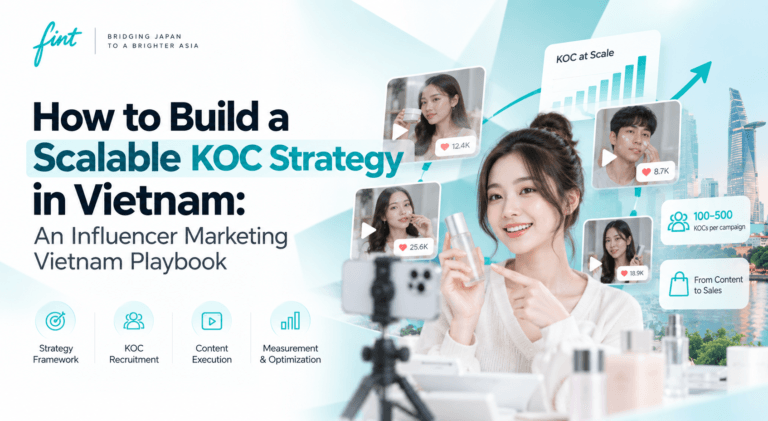
Vietnamese consumers have become masters of digital skepticism. They scroll past polished ads, ignore generic brand claims, and actively seek out content that feels unfiltered and genuine. In this environment, Key Opinion Consumers (KOCs) have emerged as the most influential voice in the purchase journey—not because they have millions of followers, but because they feel like a trusted friend sharing an honest experience.
This blog explores the psychology behind KOC influence, why they outperform traditional advertising, and what this means for brands entering Vietnam’s beauty market.
What Are KOCs and Why Do They Matter in Vietnam?
KOCs—Key Opinion Consumers—are everyday consumers with modest social media followings who share authentic product reviews and experiences. They typically have fewer than 50,000 followers and specialise in testing and reviewing products across multiple categories.
Unlike KOLs, who are seen as professional content creators or celebrities, KOCs are perceived as “people like me.” This perceived relatability is their superpower. In Vietnam’s collectivist culture, where tight group bonds heavily influence decision-making, consumers are more likely to trust a recommendation from someone they perceive as a peer rather than a paid spokesperson.
Key Difference: KOL vs. KOC
| Characteristic | KOL | KOC |
|---|---|---|
| Follower Count | 100,000+ | Under 50,000 |
| Perceived Role | Industry expert, celebrity | Everyday consumer |
| Content Style | Professional, polished | Authentic, personal |
| Trust Level | Moderate | High |
| Best For | Awareness generation | Purchase conversion |
The Psychology of KOC Influence: Why It Works
1. The Death of Traditional Advertising
Consumers are increasingly tuning out traditional advertising. As one marketing expert notes, users are bombarded with professionally crafted messages that “sometimes feel too perfect—and that perfection actually reduces the sense of authenticity” .
KOCs offer a refreshing alternative. Instead of polished slogans, they share real stories, personal experiences, and genuine reactions. Viewers feel they are listening to someone like themselves, not a brand trying to sell something. For younger consumers in particular, this distinction is critical.
2. Credibility Is the Currency of Trust
Academic research confirms that credibility is the most powerful driver of purchase intention. A study of 327 Vietnamese millennials and Gen Z consumers found that influencer opinion leadership fully mediates purchase intention through trust .
When an influencer is perceived as credible, consumers:
-
Reduce skepticism toward promotional content
-
Increase trust in product claims
-
Accept information more readily
-
Form stronger purchase intentions
3. The Three Pillars of Influencer Influence
Research consistently identifies three attributes that determine influencer effectiveness :
-
Trustworthiness: Is this person honest and reliable?
-
Expertise: Does this person know what they’re talking about?
-
Attractiveness: Is this person appealing or relatable?
For beauty products specifically, attractiveness is the strongest predictor of purchase intention, followed by trustworthiness and interactivity . This is why beauty KOCs who demonstrate visible results—skin transformations, makeup tutorials, and before-and-after comparisons—are so effective.
4. The Power of Personal Experience as a Shield
When content is framed as personal experience, the consumer’s natural defense mechanisms lower. As one expert observes: “With traditional advertising, consumers default to assuming the message is designed to sell and receive it with a defensive mindset” .
But when content is delivered as a personal story, that defensive mechanism tends to subside. Viewers don’t feel they’re being sold to—they feel they’re hearing a story or a genuine experience. This makes them more receptive to the message and more likely to agree with what’s being shared.
5. The Impact on Purchase Decisions
The numbers speak for themselves: 50% of Vietnamese consumers say their purchase decisions are influenced by KOLs and KOCs . This influence is most pronounced in categories like beauty, fashion, and consumer goods—where visual demonstration and personal experience matter most.
The Two Faces of KOC Marketing: Risks and Rewards
The Rewards: Authenticity Drives Sales
When executed ethically, KOC marketing is remarkably effective. Livestream commerce, where KOCs interact with viewers in real-time, can drive massive sales volumes in minutes. Approximately 40% of e-commerce revenue in Vietnam now comes from KOL/KOC marketing .
Brands that invest in credible KOC partnerships often see higher conversion rates, stronger brand recall, and deeper customer loyalty than those relying solely on traditional advertising or KOLs.
The Risks: When Trust Is Broken
The power of KOC influence creates a corresponding vulnerability. When KOCs promote misleading claims or low-quality products, the consequences are severe:
Case Example: The “Vegetable Candy” Controversy
Prominent KOLs and KOCs promoted a “vegetable candy” product with exaggerated health claims, suggesting it could replace fresh vegetables in a daily diet. After public backlash and regulatory scrutiny, the influencers were forced to issue public apologies .
Case Example: Weight Loss Supplements
A young woman in Hanoi was hospitalized with severe brain damage after taking weight loss pills purchased through a TikTok advertisement. Testing revealed the product contained Sibutramine, a banned substance .
The Trust Spiral: When a KOC loses credibility, the damage doesn’t stop at that individual. Research shows that Gen Z consumers respond with “skepticism, emotional backlash, disengagement, and conditional forgiveness” . This distrust transfers not only to the influencer but also to the endorsed brand, ultimately lowering purchase intention.
What This Means for Foreign Beauty Brands
1. Prioritise KOCs Over KOLs for Conversion
KOLs build awareness; KOCs drive purchases. A balanced strategy uses KOLs for initial brand introduction and KOCs for authentic validation and conversion.
2. Vet KOCs Carefully
Trust is earned and easily lost. Work with KOCs who:
-
Genuinely use and understand your product category
-
Have a history of transparent, authentic content
-
Demonstrate real engagement with their audience
-
Are willing to disclose sponsorships clearly
3. Invest in Transparency
Hidden sponsorships are the fastest way to destroy trust. As experts warn: “If sponsored content is not disclosed transparently, viewers are placed in an information asymmetry situation—they think they’re hearing an independent review when the content is actually influenced by commercial interests” .
4. Focus on Education, Not Hype
The most successful beauty KOCs are those who educate their audience. Hannah Olala, one of Vietnam’s most respected beauty creators, built her following through in-depth advice, ingredient analysis, and skincare routine guidance—not pressure tactics or exaggerated claims. Her knowledge-based approach has positioned her as a premium beauty authority and earned recognition as “Most Outstanding KOL in the Premium Cosmetics Industry” .
5. Build a Scalable KOC Program
A tiered KOC program allows you to test relationships at scale while managing costs:
-
Nano KOCs (1,000-10,000 followers): Product seeding for authentic reviews
-
Micro KOCs (10,000-50,000 followers): Paid partnerships with content commitments
-
Macro KOCs (50,000+): Strategic brand ambassador relationships
Conclusion: Trust Is the Only Sustainable Advantage
In Vietnam’s fast-moving beauty market, KOCs are not a passing trend—they are a fundamental shift in how consumers discover, evaluate, and purchase products. Their power lies in their perceived authenticity, their ability to reduce consumer defensiveness, and their capacity to build trust through genuine experience.
For foreign brands, the message is clear: invest in authentic KOC partnerships, prioritise transparency, and understand that trust is the only sustainable competitive advantage.
Frequently Asked Questions
What makes KOCs more influential than traditional advertising in Vietnam?
KOCs are perceived as authentic, relatable, and trustworthy. They frame product recommendations as personal experiences rather than commercial messages, which lowers consumer defensive mechanisms. In Vietnam’s collectivist culture, peer recommendations carry significant weight .
How do KOCs differ from KOLs?
KOCs have smaller followings and are seen as everyday consumers sharing genuine experiences, while KOLs are perceived as professional content creators or celebrities who receive significant payment for promotions. KOCs are generally considered more trustworthy .
What attributes make a KOC effective in the beauty industry?
Research shows three key attributes: attractiveness (strongest predictor), trustworthiness, and expertise. KOCs who demonstrate visible results—like skincare transformations or makeup tutorials—are particularly effective .
What is the risk of working with KOCs?
The primary risk is credibility damage. If a KOC promotes misleading claims or low-quality products, it erodes consumer trust in both the influencer and the endorsed brand. Gen Z consumers respond with skepticism, emotional backlash, and disengagement .
How much of Vietnam’s e-commerce revenue comes from KOL/KOC marketing?
Approximately 40% of e-commerce revenue in Vietnam now comes from KOL/KOC marketing, reflecting how central these channels have become to the consumer purchase journey .
What type of KOC content is most effective for beauty brands?
Content that educates, demonstrates, and shares genuine experiences is most effective. Successful beauty KOCs focus on ingredient analysis, skincare routine guidance, and visible before-and-after results—not pressure tactics or exaggerated claims.