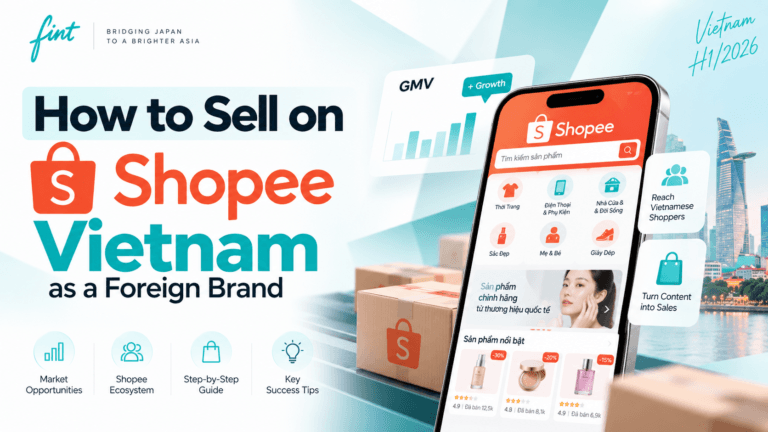
The Vietnamese beauty market is no longer an emerging opportunity — it is a full-blown battleground. Projected to reach approximately $3 billion by 2026, with a compound annual growth rate of 8.3% (2024-2028), Vietnam stands as one of Southeast Asia’s most dynamic consumer markets. For international beauty brands looking to enter via cross-border e-commerce, the opportunity is immense — but the regulatory landscape has fundamentally shifted as of July 1, 2026.
This guide provides a comprehensive framework for international beauty brands navigating Vietnam’s cross-border e-commerce ecosystem, covering regulatory compliance, channel strategy, logistics, and marketing in the post-July 2026 environment.
Why Vietnam Demands a Cross-Border E-Commerce Strategy
A Market in “Pre-Brand Era”
Vietnam’s beauty market presents a unique window of opportunity. The country has a young population of nearly 100 million, with a median age of just 34 . GDP growth consistently runs at 7-8%, fueling an expanding middle class with increasing disposable income .
Market observers describe Vietnam as being in a “pre-brand era” for beauty: domestic brands are scarce, with only a few achieving meaningful scale. The market is largely split between expensive international imports (Japanese, Korean, Western) and untrusted factory goods — leaving a clear middle-market gap that international brands can fill.
Vietnamese Consumers: The “Consumption Awakening”
Vietnamese consumers are undergoing what experts call a “consumption awakening.” They purchase not just for necessity but for identity and self-expression, and they are willing to pay for quality . Key characteristics include:
-
Young and digitally-native: Information consumption through social media and live commerce is the norm
-
High purchase intent: Spending on personal care products is increasing by approximately 12% annually — the highest rate among fast-moving consumer goods
-
Content-driven decisions: KOL/KOC reviews, short-form video, and livestreaming dominate purchase decisions.
The E-Commerce Powerhouse
Revenue from the beauty and personal care industry on Shopee, TikTok Shop, and Lazada reached approximately VND 74.4 trillion in 2025, leading the entire e-commerce market . For cross-border brands, these platforms are the primary entry point.
The New Regulatory Landscape: E-Commerce Law 2026
The 2025 E-Commerce Law, effective July 1, 2026, represents the most significant regulatory shift for cross-border beauty brands entering Vietnam . Understanding and complying with these provisions is non-negotiable.
Clearer Classification of Foreign Platforms
A foreign e-commerce platform is considered operating in Vietnam if it is managed by a foreign organization and either :
-
Offers Vietnamese as a display language
-
Uses Vietnam’s “.vn” domain
-
Reaches the prescribed transaction threshold with Vietnamese buyers
Foreign Platform Operators: Entity or Representation
Foreign intermediary e-commerce platforms (including social media platforms engaged in e-commerce) must [establish a legal entity in Vietnam] before offering Vietnamese-language interfaces, using “.vn” domains, or after reaching transaction thresholds .
Where treaties do not permit local entity requirements, platforms may instead :
-
Appoint an authorized legal entity in Vietnam
-
Lodge a security deposit with a Vietnamese bank
-
Comply with platform management conditions
Seller Verification and Goods Control
Under the new law :
-
Overseas sellers must complete electronic identity verification using legally valid documents
-
Platforms must prevent counterfeit and smuggled goods and products infringing intellectual property rights
-
Data retention requirements: Goods-related information retained for at least 1 year; contract and transaction data for at least 3 years
-
Complaint handling: Representatives must receive and resolve complaints involving foreign sellers
Live Commerce and Affiliate Marketing Now Regulated
The law brings livestream selling and affiliate marketing within the regulatory framework for the first time :
-
Identity verification required for participants
-
Audio and video recordings must be retained for at least 1 year
-
Broadcasts must be suspended or content removed when violations detected
-
Information must be provided to competent authorities upon request
Market Access for Foreign Investors
Foreign investors seeking to invest in intermediary e-commerce platforms face conditional market access under the Law on Investment. Where a foreign investor exercises control over a large digital platform, the investment is subject to national security appraisal by the Ministry of Public Security.
Tax Obligations: Decree 252/2026
Under Decree 252/2026 (also effective July 1, 2026), cross-border sellers face new tax obligations:
-
Withholding by Vietnamese purchasers (B2B): Vietnamese organizations purchasing from foreign suppliers must withhold VAT, CIT, and/or PIT at time of payment
-
Platform withholding: E-commerce platforms with online ordering and payment functions must withhold taxes on behalf of foreign suppliers, with monthly declarations required
Distribution Channels for Cross-Border Beauty Brands
E-Commerce Platforms: The “Big Three”
Shopee, TikTok Shop, and Lazada dominate the Vietnamese beauty e-commerce landscape. International brands typically begin their market entry on these platforms to leverage existing traffic, then transition to their own brand websites for customer ownership.
Logistics and Supply Chain for Cross-Border Beauty
Import Procedures
Cosmetics import requires coordinated legal documentation and shipping. Brands importing from China, Korea, Poland, and France face different documentation requirements and standards .
Key regulatory considerations include:
-
Product notification requirements (cosmetic product declaration)
-
Ingredient listing and safety documentation
-
Labeling compliance (Vietnamese language requirements)
-
Product Information File (PIF) maintenance
Optimizing Shipping Terms
A case study on cosmetics import procedures identified that optimizing shipping terms from CIP to FOB improved cost control and timeline synchronization . This shift gives importing brands better control over logistics costs and delivery timing.
End-to-End Logistics Solutions
T86 international shipping solutions designed for e-commerce parcels offer :
-
End-to-end tracking
-
Customs clearance
-
Last-mile delivery
For beauty and skincare products under 2kg, specialized fulfillment services can reduce delivery times from 7-14 days to 1-3 days through localized warehousing .
Fulfillment Best Practices for Beauty Products
Cross-border fulfillment for beauty products requires :
-
Inventory management with expiry tracking
-
FIFO (First In – First Out) stock rotation
-
Real-time inventory visibility across warehouses
-
Integration with e-commerce platforms for order and inventory sync
Marketing and Consumer Engagement
Localizing Your Brand
Direct translation of content from Japanese or Korean brands often fails in Vietnam. Vietnamese consumers respond to local influencer reviews over product images . Successful localization requires:
Content Strategy by Platform
| Platform | Primary Use | Key Tactic |
|---|---|---|
| Community building, remarketing, livestreams | Brand communities, retargeting | |
| TikTok | New customer acquisition, viral demos | Before/after content, short-form video |
| Premium brand positioning | Professional visuals, aspirational content | |
| Shopee/Lazada | Short-term sales conversion | Flash sales, voucher optimization |
Meeting the “Clean Beauty” Trend
Consumers increasingly prioritize products with natural, transparent, and sustainable ingredients. The global clean cosmetics market is forecast to grow from $10.5 billion in 2025 to $35.3 billion in 2033, and Vietnam is following this trend . For cross-border brands, this means:
-
Investment in ingredient transparency
-
Clear product origin documentation
-
Meeting increasingly stringent legal standards for product safety
Channel Selection by Business Stage
| Stage | Recommended Channels | Rationale |
|---|---|---|
| Market Entry | Shopee + TikTok Shop + Local Distributor | Leverage existing traffic, regulatory navigation, minimize fixed costs |
| Growth | Facebook + TikTok + Shopee + Lazada + Influencer Network | Build community, increase brand awareness, drive conversion |
| Scale | Brand Website + Omnichannel + AI-Powered Commerce | Sustainable organic traffic, customer ownership, data-driven marketing |
Key Takeaways for Cross-Border Beauty Brands
-
Regulatory compliance is non-negotiable: The July 1, 2026 E-Commerce Law imposes clear requirements on foreign platforms, sellers, and live commerce activities. Establish local representation or a legal entity as required .
-
Start with marketplaces, scale with your own channel: Leverage Shopee, TikTok Shop, and Lazada for market entry, but build your brand website as a “customer data fortress” .
-
Partner for success: End-to-end partners like AnyMind Group, YourPlanner, and Yusen Logistics provide the local expertise and infrastructure needed for market entry .
-
Localize relentlessly: Vietnamese consumers respond to local influencer reviews, tailored product formulations, and culturally relevant content .
-
The AI advantage: AI-powered influencer matching, live commerce, and data analytics are becoming competitive differentiators .
-
Prepare for the clean beauty wave: Ingredient transparency and product safety are increasingly important purchase drivers .